Trump personally signs Iran deal at Versailles in major diplomatic breakthrough
President Donald Trump personally signed the U.S.-Iran memorandum of understanding during a dinner at the Palace of Versailles. Iranian President Masoud Pezeshkian also signed the agreement.
Coverage for this event has ended.
Pakistan says Strait of Hormuz to reopen amid historic 'Islamabad MOU,' US to lift blockade
The prime minister of Pakistan announced the reopening of the Strait of Hormuz and the lifting of the U.S. blockade of Iranian ports following the signing of a memorandum of understanding (MOU) by President Donald Trump and President Masoud Pezeshkian.
"Islamabad MoU shall enter into force with immediate effect and, as a first step, the Islamic Republic of Iran will instantly reopen the Strait of Hormuz, and the United States of America will immediately lift the naval blockade," Shehbaz Sharif said on X, before congratulating Trump.
"I express my profound respect and appreciation to His Eminence Ayatollah Seyyed Mojtaba Hosseini Khamenei, the Supreme Leader of the Islamic Republic of Iran, and President Masoud Pezeshkian for their wisdom, foresight and statesmanship in embracing the cause of peace," he said.
US-Iran peace progress coverage continues Thursday, June 18
The U.S.-Iran memorandum of understanding (MOU) was signed two days early and the deal takes immediate effect.
Nuclear talks remain ongoing after President Donald Trump signed MOU in a Palace of Versailles ceremony Wednesday night.
Coverage continues on Fox News on Thursday, June 18.
Trump returns to US after G7 summit as Iran ceasefire framework takes effect
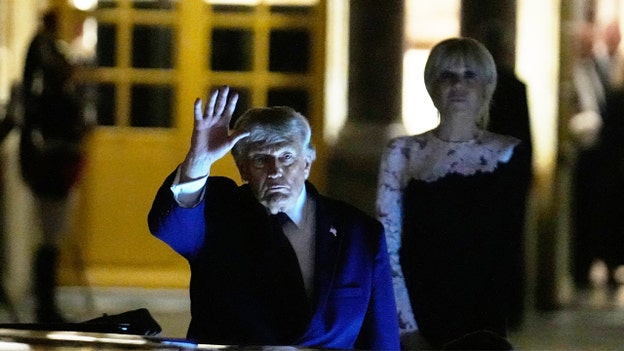
President Donald Trump returned to the United States on Thursday after a high-stakes G7 summit in France that culminated in the signing of a U.S.-Iran memorandum of understanding aimed at halting months of fighting and opening negotiations toward a broader peace deal.
Trump signed the agreement while attending meetings in France, while Iran signed remotely. The temporary framework calls for an immediate cessation of hostilities, the reopening of the Strait of Hormuz, limits on Iran's enriched uranium stockpile and a 60-day window to negotiate a permanent agreement addressing Tehran's nuclear program.
The deal also includes provisions to ease economic pressure on Iran, including access to some frozen assets and the lifting of certain restrictions, while drawing criticism from some conservatives who argue the agreement offers too many concessions without requiring Iran to immediately dismantle its nuclear infrastructure.
The Trump administration has framed the accord as a major diplomatic breakthrough that reduces the risk of a wider regional war and stabilizes global energy markets. U.S., Iranian, Pakistani and Qatari representatives are still expected to meet in Switzerland to begin discussions on implementing the agreement.
Sen Cruz says giving billions of dollars to 'lunatics’ in Iran 'is not a good idea’
Sen. Ted Cruz, R-Texas, said on Wednesday that he believes President Donald Trump received bad advice and that it is "not a good idea" to give Iran hundreds of billions of dollars as part of a Memorandum of Understanding (MoU) with the Middle Eastern nation.
"History teaches that giving billions of dollars to theocratic lunatics who want to murder us is not a good idea. I think the president is receiving some very poor advice on this deal," Cruz told The Hill.
This comes after the Trump administration released the full text of the peace deal with Iran, which includes lifting sanctions on Iranian oil exports and giving Iran access to a $300 billion reconstruction fund.
Other Republicans also criticized the agreement, including Sen. Bill Cassidy, R-La.
"Reagan is rolling over in his grave. Iran’s nuclear ambitions were not curbed, and they have learned that threatening the Strait of Hormuz works and will undoubtedly leverage it in the future. Now, Iran gets to build brand-new infrastructure under this deal," Cassidy wrote on X.
"Before the war, the strait was open, Iran was being crushed by sanctions, and 13 service members were still alive. Now, 13 Americans are dead, families have paid billions at the pump, sanctions will be lifted, and the bombing has stopped. This is the worst foreign policy blunder in decades," he continued.
Pope praises US-Iran deal, hopes for strengthened 'trust, security, and stability' in Middle East
Pope Leo XIV hailed the new agreement between the U.S. and Iran to end the war in the Middle East, adding that he hoped for strengthened "mutual trust, security, and stability" in the region.
"I welcome with satisfaction the reaching of an agreement between the Islamic Republic of Iran and the United States of America, which will be signed on Friday, as an encouraging result of patient work in dialogue and negotiation. I express my gratitude to the countries that have worked to facilitate a meeting between the parties and to make this agreement possible," Leo, who has denounced the conflict since it began with U.S.-Israeli attacks in February, said on X.
"I hope that the agreement may help strengthen mutual trust, security, and stability in the Middle East, promoting paths of dialogue and cooperation among peoples," he added.
Sen Schmitt says Trump achieved what many experts thought was impossible: 'Good outcome'
Sen. Eric Schmitt, R-Mo., said on Wednesday that President Donald Trump accomplished what experts previously believed could not be achieved in the war against Iran, after brokering an agreement to end the conflict.
"President Trump was very clear from the beginning about the mission here, which was to ensure that Iran would never have a nuclear weapon. They no longer have the ability to do that, and now they're signing on the dotted line, for the first time, that they won't pursue it. And we don’t need to trust them—we just need to verify it," Schmitt said during an appearance on Fox News' "Hannity."
"The president effectively knocked out their military capability. Their navy is at the bottom of the sea. They have no air defense. Their nuclear program is in shambles and nowhere near being restarted. And if necessary, we can always go back and mow the lawn because we've got eyes on it," he continued.
The senator added: "What the president has done is create space for diplomacy, which has always been his North Star. There's still more work to do, and we need to verify all of this, but he has accomplished something that most experts six months ago would have said was impossible. I think it’s a good outcome for the American people."
Versailles adds chapter to its diplomatic history with Trump's 'Islamabad MOU' signing
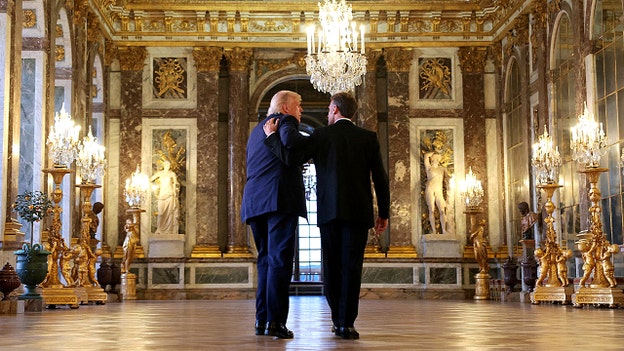
While the Palace of Versailles was the venue where President Donald Trump signed the memorandum of understanding (MOU), the moment continued the palace’s tradition as a setting for significant international diplomatic and political agreements.
The most famous is the Treaty of Versailles, signed on June 28, 1919, between Germany and the Allied powers, which officially ended World War I.
The palace also hosted diplomatic negotiations related to the end of the American Revolutionary War and the Franco-Prussian War, highlighting its long-standing role in international affairs.
Pezeshkian displays signed 'Islamabad MOU' as Iran, US strike historic agreement
Iran’s semi-official Tasnim News Agency on Wednesday published images of President Masoud Pezeshkian after he signed the historic Islamabad Memorandum of Understanding (MOU).
“Pezeshkian Signs Islamabad Memorandum of Understanding,” the agency said in a post on X.
“The President of Iran and the President of the United States signed the text of the memorandum of understanding digitally and remotely within a short period of time,” Tasnim said.
The agreement marks a significant step in efforts to formalize a framework for advancing negotiations between Tehran and Washington.
Macron calls Trump-Iran memorandum an encouraging step toward peace
French President Emmanuel Macron said Wednesday the newly signed memorandum of understanding (MoU) between Iran and the United States was a positive step forward.
“President Trump signed tonight at Versailles the agreement between Iran and the United States,” Macron said in a post shared on X.
“This agreement paves the way for lasting peace and allows the reopening of the Strait of Hormuz,” he added before saying that the deal was an "important step in the right direction for our compatriots that will soon enable a decrease in energy prices."
Iran-US agreement allows Tehran to keep enriched material, unlocks frozen funds: report
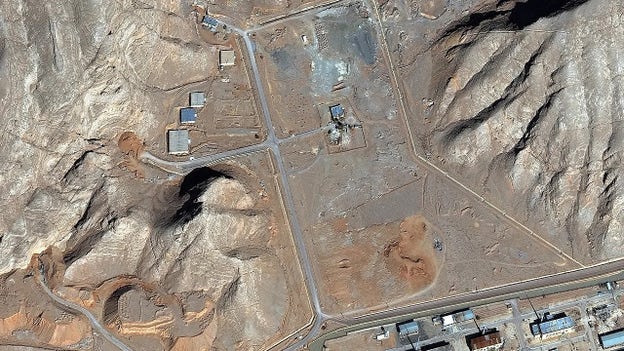
Iran and the United States agreed in a draft Memorandum of Understanding (MoU) that Iran's enriched nuclear material would stay inside the country and be diluted under the supervision of the International Atomic Energy Agency (IAEA), according to reports citing a leaked copy of the agreement.
The Jersualem Post also stated that, upon signing the agreement, the United States and Iran would establish a mechanism allowing Tehran access to frozen funds and assets held abroad.
According to the text, the release of those funds would not be contingent on Iran first taking significant additional steps.
Articles 8 through 14 of the memorandum outline restrictions on U.S. military activity in the region and establish a framework for continued negotiations over Iran's nuclear program following the signing of the agreement.
The draft further states that the U.S. Treasury Department would issue waivers permitting the export of Iranian crude oil, petroleum products and related derivatives. It also calls for the release of Iranian funds that have been frozen or otherwise restricted.
Video shows Trump signing copy of Iran agreement before dinner at Versailles
Deputy Chief of Staff Dan Scavino shared a video on X Wednesday showing President Donald Trump signing the Iran Memorandum of Understanding (MOU) at the Palace of Versailles at a dinner hosted by French President Emmanuel Macron.
According to Scavino, Secretary of State Marco Rubio delivered the document for Trump's signature, formally putting the agreement with Iran into effect.
“Just prior to this evening's dinner at Versailles in France, hosted by President @EmmanuelMacron—President @realDonaldTrump signed the Iran Memorandum of Understanding, once Secretary Rubio received it…
The clip shows the president signing the document before guests applaud. Rubio shakes hands with Macron, who claps and says “Bravo,” as the secretary of state takes the document.
The agreement represents a significant milestone in ongoing U.S.-Iran diplomatic efforts and follows earlier electronic approvals by both parties.
Iran says Friday talks with US in Geneva unconfirmed after Trump, Pezeshkian sign MOU
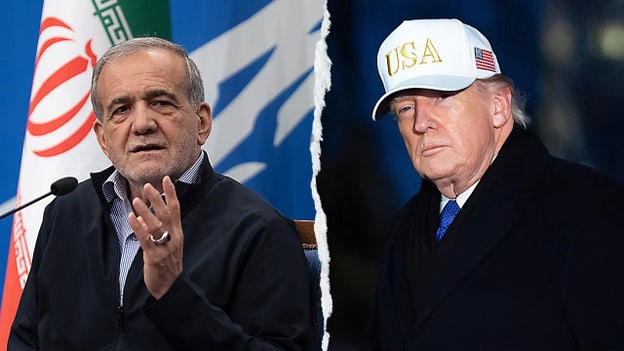
Iranian Foreign Ministry spokesman Esmaeil Baghaei said Wednesday that talks between Iran and the United States scheduled for Friday in Geneva remained unconfirmed, according to reports.
His remarks came after President Donald Trump and Iranian President Masoud Pezeshkian signed the memorandum of understanding (MOU).
"The Friday meeting was confirmed until a few hours ago, but when it was decided that the presidents of the two sides (Iran and the U.S.) would sign the agreement, it was decided to pause consideration of the Friday meeting for now," Baghaei said, according to Reuters.
Commenting on the agreement itself and Baghaei said Iran's missiles are "only for firing, not for negotiation," adding that Iranians do not "like anyone talking about them."
"Iran's defense capabilities would not be discussed in any process or with any party," Baghaei said before stating that responsibility for the Strait of Hormuz rests with Iran and Oman.
Reuters also reported that Baghaei said the United States is committed to removing all obstacles to Iran's access to its frozen funds.
Trump personally signs Iran deal during dinner at Versailles
President Donald Trump personally signed the Iran memorandum of understanding (MOU) on Wednesday, a White House official confirmed.
Trump signed the document during a dinner with President Emmanuel Macron at the Palace of Versailles.
A photo of the agreement was sent to the Iranians and the mediating countries, the official said.
As Trump left the dinner, Macron pointed to the palace outside. The two men then embraced and said goodbye.
French reporters asked the president whether he had signed the document, to which he replied, "It's signed. We signed it in Versailles. We just signed it."
Given the agreement between the two nations is now in effect to end the war, the planned main signing ceremony in Geneva will no longer take place, Reuters also reported Wednesday.
President Masoud Pezeshkian signed for the Iranian side, the outlet said.
Iranian Foreign Ministry spokesman Esmaeil Baghaei also said Wednesday that plans for the negotiating teams to travel to Geneva remain in place despite the cancellation of the formal signing event.
According to Iran International, a source close to the negotiating team, cited by the IRGC-affiliated Tasnim News Agency said Tehran also insisted that a Persian-language version of the MOU be prepared and formally signed by both parties.
The source said the Persian text has been recognized as an official version of the document alongside the original agreement.
Fox News' Nick Rojas contributed to this report.
Saudi Arabia says verification is key issue in US-Iran nuclear talks
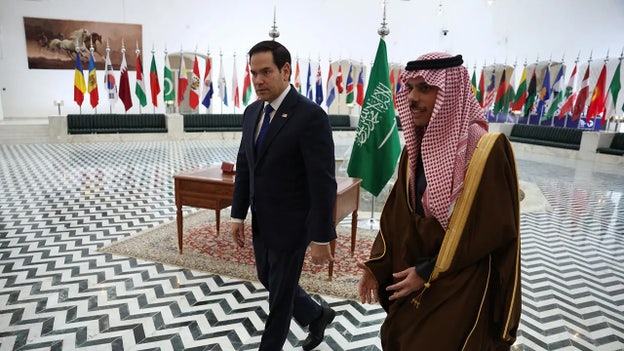
The most critical issue in imminent nuclear talks between Iran and the United States is how Iran's nuclear programme will be policed, Saudi Arabia's Foreign Minister Prince Faisal bin Farhan said Wednesday.
"The detail will matter," Prince Faisal told Reuters at a conference in Vienna hosted by the European Council on Foreign Relations.
"It will be most important to see the verification mechanisms that are put in place beyond the actual commitments on uranium enrichment, the actual commitment on the removal or downblending of nuclear materials," he said.
President Donald Trump has said he wants to remove Iran's enriched uranium. A senior Iranian official also told Reuters Iran had agreed in principle to dilute, or downblend it.
Trump's Iran deal 'giving a lot more to get a lot less' than Obama's, senator says
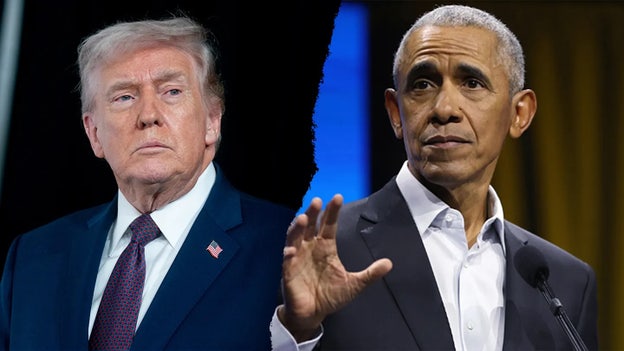
President Donald Trump's preliminary agreement with Iran is making its way through the media, but it still hasn’t made its way into the hands of lawmakers on Capitol Hill.
Those who have read the reports are split on the memorandum of understanding (MOU) that the administration intends to finalize in a ceremonial signing on Friday.
Some say it’s a worse outcome than former President Barack Obama's Iranian nuclear agreement, known as the Joint Comprehensive Plan of Action (JCPOA), which Trump ripped up in his first term.
"Everything I've seen is, like, what's being reported by Bloomberg or the read-out on this thing is, we are giving a lot more to get a lot less than we got in the JCPOA," Sen. Tim Kaine, D-Va., said.
"Now, I can't say that with an exclamation point on it until I actually see the memorandum, but every bit of reporting, thus far, says, we're giving a lot more to get a lot less than what we had before Donald Trump," he continued.
The schism on the MOU doesn’t follow party lines, either. "Reagan is rolling over in his grave," Sen. Bill Cassidy, R-La., said on X. "Iran’s nuclear ambitions were not curbed, and they have learned that threatening the Strait of Hormuz works and will undoubtedly leverage it in the future.
Now, Iran gets to build brand-new infrastructure under this deal."
This is an excerpt from a report by Alex Miller and Morgan Phillips.
Graham backs Trump's Iran deal, now says it could ease Middle East tensions
Sen. Lindsey Graham (R-S.C.) on Wednesday voiced support for President Trump’s memorandum of understanding (MOU) with Iran, arguing an agreement could ease tensions in the Middle East and help restore stability.
The decsion came after Graham said he had a “very lengthy and productive discussion” with special envoy Steve Witkoff.
“After this discussion, it is my opinion that signing the MOU will be beneficial to the United States, in as much as the Strait of Hormuz will begin to open, and the hostilities with Iran will stop,” Graham wrote on X.
The South Carolina Republican said Washington's effort was worth it.
“Whether or not the United States can reach an acceptable, verifiable deal with Iran regarding its nuclear program and other issues is yet to be determined, but I see little downside to trying,” Graham said.
He added that reopening the strategically vital Strait of Hormuz and ending hostilities could have broader implications for regional peace.
“The economic stability that comes from opening up the Strait and the cessation of hostilities could create a pathway to peace well beyond the Iranian conflict,” Graham said.
Iran warns US bases could become ‘museums of admonition’ after Trump bombing threat
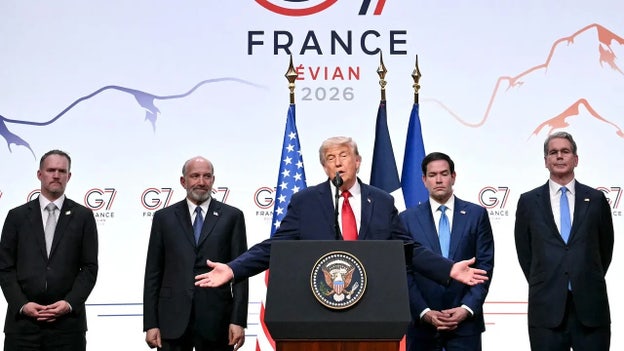
A spokesperson for the Iranian Parliament’s National Security and Foreign Policy Committee responded to President Donald Trump’s warning Wednesday that the United States would “probably” bomb Iran if it failed to meet its deal obligations.
“Trump said: ‘If Iran's leaders don't improve their behavior, we'll go back to dropping bombs on their heads,’” Ebrahim Rezaei wrote on X.
“First of all, this means a violation of the first clause of the agreement. Second, although up to this point it has been Trump who has been forced to improve his behavior — including minimal control over rabid dogs, lifting the siege, and recognizing the sovereignty of the Islamic Republic instead of illusions of fragmentation and overthrow — if he thinks of bombs again this time, we'll turn his bases in the region into museums of admonition,” Rezaei added.
Trump also reiterated that military action remained a possibility after touching down in Paris.
“If they don't, if they don't come through, is it a threat that we'd bomb? You could call it whatever you want, but it'll probably happen,” Trump said.
Lebanon pushes to fast-track Israel ceasefire talks amid broader regional diplomacy: report
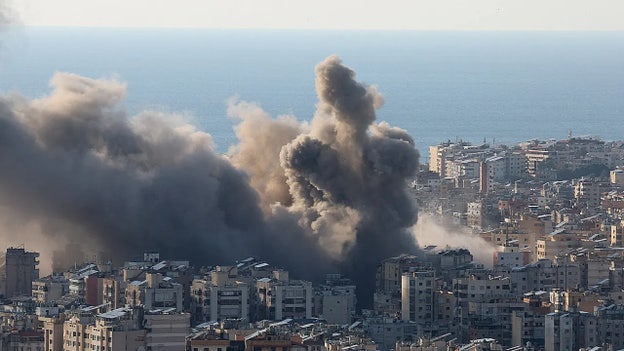
Negotiations between Lebanon and Israel aimed at securing a ceasefire and border security arrangements could accelerate as Washington and Tehran move toward signing a deal Friday to end the war, according to reports.
The National, citing a senior official, reported that Lebanon is seeking to speed up the talks.
"Lebanon wants to rush and take advantage of the ceasefire in the Gulf to make progress on a de-escalation on the Israel-Lebanon front that will lead to an agreement on a ceasefire as soon as possible," the official said.
According to the official, Beirut's goals include an Israeli withdrawal from southern Lebanon and the restoration of state authority through the Lebanese Armed Forces, while ensuring Hezbollah does not reestablish a presence in the area.
A new round of talks between Lebanon and Israel is expected in Washington next week.
Hezbollah chief rejects pilot zones in US-brokered talks, demands 'reciprocal security'
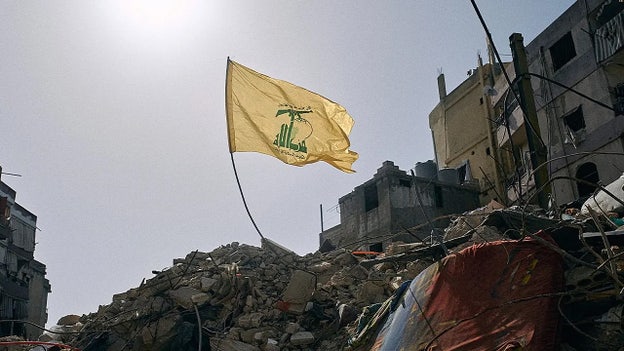
Hezbollah chief Naim Qassem said Wednesday that the "ceiling" to be reached in negotiations between Lebanon and Israel was a situation of "reciprocal security."
In a televised address, Qassem said the group rejects pilot zones agreed to in the U.S.-brokered talks between Lebanon and Israel, Reuters reported.
This came ahead of Israeli-Lebanese negotiations set for next week. Israel and Hezbollah have been at war since March 2.
Lebanese President Joseph Aoun insisted his nation's talks with Israel, brokered by the United States and held in Washington, were independent of the regional deal.
The Israeli Defense Forces (IDF) have since struck targets in southern Lebanon, killing at least five people, according to state media, with further Israeli raids in the region on Wednesday.
The IDF also reported Hezbollah rocket fire in the south.
Trump says Iran should be allowed ballistic missiles 'in relative proportion' to Gulf neighbors
President Donald Trump said Wednesday that he would be comfortable with Iran having ballistic missiles in proportion to other countries in the Middle East, drawing a distinction between conventional missile capabilities and Tehran's nuclear ambitions.
Speaking to reporters after arriving in Paris, Trump argued it would be unfair to deny Iran ballistic missiles if neighboring states maintain similar arsenals.
"I'm saying that if other countries have them, it's a little bit unfair for them not to have some," he said.
"A ballistic missile is not the same thing as what we're talking about when we talk nuclear.
"But if Saudi Arabia and Qatar and they all have some, I would say in relative proportion, I think it's okay. That's what I mean. Okay."
Trump then turned to the prospect of a new agreement with Tehran and the country's obligations under a proposed deal.
"If they don't, if they don't come through, is it a threat that we'd bomb? You could call it whatever you want, but it'll probably happen," he said.
Asked about the 60-day extension period for reaching a final agreement with Iran, Trump downplayed the issue.
"Just as long as they're behaving. I really don't care that much," he said.
Sanctioned Iranian tankers leave Hormuz, pass US blockade ahead of anticipated MOU
Sanctioned Iranian oil tankers are moving through the Strait of Hormuz, maritime intelligence firm Windward said on Wednesday, as Washington and Tehran appear to be nearing an agreement.
“1/2 Iranian tankers aren't waiting for Friday's U.S.-Iran MOU to be signed,” Windward said in a post on X.
The firm identified three National Iranian Tanker Company (NITC) vessels — two very large crude carriers (VLCCs) and one Suezmax tanker — that have been under U.S. sanctions since 2018. The vessels went dark off the Iranian port of Chabahar in March.
“On June 16, they switched AIS back on and are sailing past the U.S. blockade,” Windward said.
“Tankers appear to be leaving the blockade area in anticipation of the deal,” the company added.
Iran signs helicopter deal with Russia, full fleet due by 2027, IRGC says
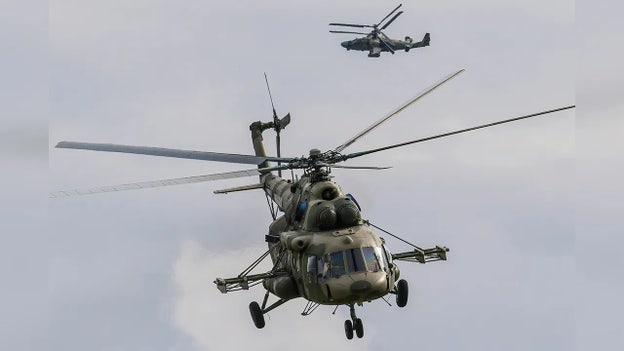
IRGC spokesperson Ebrahim Zolfaghari said Wednesday that Iran has signed a deal to procure Russian-made helicopters, with a full fleet also under contract.
Iran has signed a deal to procure 20 Russian-made Mi-8 and Mi-17 helicopters for use in emergency response, air ambulance missions, firefighting, and search-and-rescue operations, Zolfaghari said before stating that the first four aircraft have already been contracted, with the full fleet scheduled for delivery by March 2027.
This came after President Donald Trump said at the G7 summit Wednesday that Russian President Vladimir Putin had been "neutral" during the war with Iran, saying Russia had not thwarted his efforts to curb Tehran’s nuclear ambitions.
Trump administration unveils sweeping terms of proposed Iran agreement
The Trump administration on Tuesday publicly outlined the contents of its newly signed memorandum of understanding with Iran, revealing plans for immediate waivers on Iranian oil exports, a framework for at least $300 billion in reconstruction and economic development, and a 60-day negotiation period aimed at securing a final agreement on Tehran's nuclear program.
During a call with reporters, senior U.S. officials read portions of the agreement and defended controversial provisions that would allow Iranian crude oil exports to resume immediately while broader negotiations continue.
"The U.S. Department of Treasury will issue waivers for the export of Iranian crude oil, petroleum products and derivatives and all associated services including banking transactions, insurances, transportation, etc," the agreement states, according to officials. They declined to provide the written text of the agreement.
An official emphasized the oil waivers are the only major benefit Iran will receive before a final agreement is reached, arguing the move would increase transparency into Iranian oil sales while helping reduce global energy prices.
This is an excerpt from a story by Morgan Phillips.
Trump says new Iranian leaders are smarter than old guard
President Donald Trump complimented Iran's new leadership as smarter and more patriotic than their predecessors during a Wednesday press conference at the G-7 Summit in France.
"They have a new group of leaders that I think is, actually, I think they're smarter. I think they're very smart. I think they're far less radicalized," Trump said.
"I think they're really good," he said. "They love their country. You know, you talk about regime change. Nobody will say that. But I guess that's one set of leaders is all gone. The second set of leaders is all gone. Their third set of leaders a little bit gone, but for the most part, and frankly, I think it's regime change. I think they're going to behave much differently. I think they see a different way of life," he said.
Trump reveals that Israel refused to kill Soleimani so he did
President Donald Trump revealed Wednesday that Israel balked at the opportunity to strike Iranian General Qasem Soleimani in 2020 so he made the decision that the U.S. would do it.
Speaking at a press conference at the G-7 Summit in France, Trump claimed that the U.S. airstrike which eliminated Quds Force General Qassem Soleimani came after Israel "didn't want to do it."
"In all fairness, because they've been wonderful to me, Israel. But they didn't want to do that attack. They were all set the night before the attack. They informed me they didn't want to do it, so I had to make a decision. I made the decision to do it," Trump said.
Trump slams Obama-era Iran deal, says US goes back to bombing in 60 days if terms don't get done
President Donald Trump slammed former President Barack Obama's Joint Comprehensive Plan of Action (JCPOA) as "one of the worst deals" while speaking at the G-7 Summit in France on Wednesday.
"I made it very tough for them when I terminated the Barack Hussein Obama catastrophe. JCPOA, one of the worst deals. NAFTA might have been worse, but that was worse economically. This deal was really dangerous," Trump said.
Trump withdrew from the agreement in 2018, reimposing economic sanctions on Iran that Obama's deal had relieved in 2015.
"What he did, he gave them everything, including a lot of money, which we don't give them," Trump added Wednesday.
Trump also said that the U.S. would return to bombing Iran if the country did not adhere to stipulations in the recently agreed-to memorandum of understanding.
"If it doesn't get done in 60 days, we go back to bombing. You know, I don't want to do that because it's so good. But, we might have to because we're never going to let them have a nuclear weapon, but they've agreed not to. And you'll see that very clearly in the agreement," he said.
Trump says he encouraged Netanyahu to have a 'softer touch' in Lebanon
President Donald Trump said he encouraged Israeli Prime Minister Benjamin Netanyahu to have a "softer touch" in Lebanon, adding that he didn't think Israel was doing a very good job.
"In all fairness to Bibi, Netanyahu happens to be a good man, gets a little excited sometimes, but he happens to be a very good man," Trump said.
"We've had an amazing partnership. He's been an amazing prime minister who we have a little dispute over Lebanon. And I said, 'you can do a little softer touch, Bibi. You don't have to knock down a building every time somebody walks into it. That's from Hezbollah.' But it's been an amazing partnership. But he will say we're the big partner and he's the very small partner," Trump continued.
"I think they could do better with respect to Hezbollah. I'm not saying they shouldn't protect themselves. I'm saying when two drones are shot into the desert and drop harmlessly, you don't have to knock down buildings in Beirut. They could behave there. And frankly, they could do a better job. I, I love them as a partner. They were terrific. But they could do a much better job with Hezbollah on that. I don't think they're doing well," Trump added.
Trump also expressed sympathy for the people of Lebanon.
"I feel very bad for Lebanon. Lebanon's been, you know, it was a great culture. It was a great. They had the professors, the doctors, the lawyers. It was an incredible culture, maybe the highest in the Middle East for years and years, centuries. And for the last 50, 60 years, they have been just trashed. They have been they have been living in hell," he said.
Macron calls US-Iran deal 'excellent'
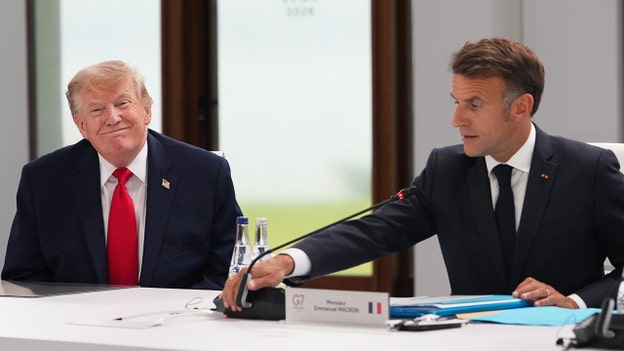
French President Emmanuel Macron praised the peace deal between the U.S. and Iran as "excellent" during remarks at the G-7 Summit in Évian-les-Bains, France on Wednesday.
"We welcome the excellent agreement concluded between the United States of America and Iran obtained by President Trump," Macron said.
“This is an agreement we support, because it’s one that puts an end to a situation of huge instability with major impacts on our economies, as you can see, all of you, day in and day out," Macron continued.
“Our compatriots can all see this was a good idea to reach this agreement. We’ve agreed that free and toll-free passage through the Hormuz Strait is the keystone of this agreement, and that starts as of now.”
Macron also indicated that France and other European nations are "ready and willing to play a major role" in helping get shipping resumed in the Strait of Hormuz.
"Obviously this is an offer on the table but it will depend on the agreements reached between Iran and the United States of America," he added.
"In any case, it is there. It is something we're willing to provide and there are various countries from the region that are willing to respond very quickly and there are about 20 countries who have already fully committed to commit to this kind of operation," Macron concluded
Trump says world leaders have committed to assisting Hormuz mine clearing, but 'we don't need them'
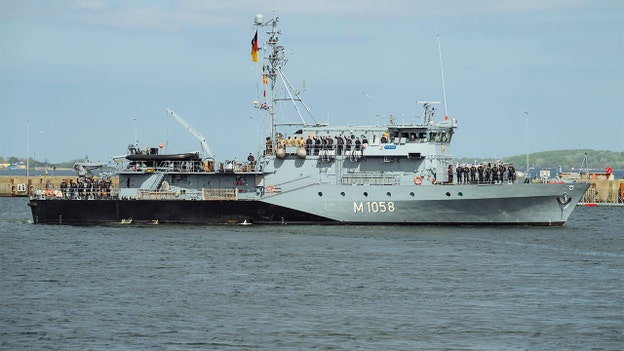
President Donald Trump revealed that numerous world leaders have offered to assist the U.S. in removing Iranian mines from the Strait of Hormuz but insisted "we don't need them" while speaking at the G-7 Summit on Wednesday.
"We don't need them, but if they want to send them I think it's good," he responded to a question about whether or not he wanted European nations to send minesweeping boats.
When asked if any nations have committed to helping, Trump said "yes, all of them. The ones that have that kind of equipment have.
"But every one of them have committed to being involved in some form," he replied.
Trump says Israel doesn't need to stop Lebanon strikes but wants 'them to use good judgement'
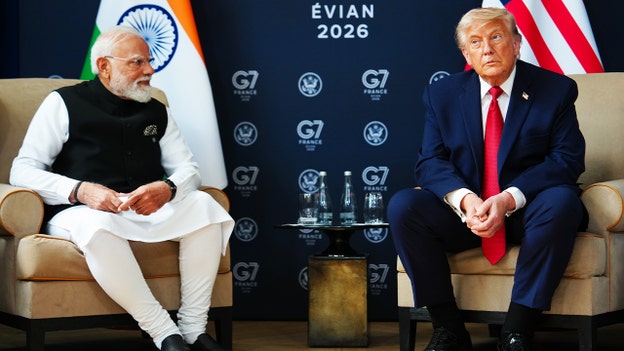
President Donald Trump said he didn't want Israel to halt their military campaign in Lebanon but added that he wanted Israel "to use good judgement" while speaking at the G-7 Summit in France on Wednesday.
Israeli military activity to combat the Iranian-backed terrorist group Hezbollah in Lebanon has been a consistent sticking point in peace negotiations between the U.S. and Iran, with Iranian negotiators at times insisting that a halt of Israeli activity in Lebanon.
When asked if he wants Israel to halt it's military campaign in Lebanon Trump said, "no, I want Israel to be able to protect itself. But I do want them to use good judgement.
Trump had previously publicly warned Israel to stop strikes in Lebanon, writing on Truth Social in early June that both Israel and Lebanon must "stop shooting" to protect a fragile Iranian peace deal.
On June 14, Trump reiterated his warning, writing on Truth Social "There should be no more attacks by Israel anywhere in Lebanon... This could be the beginning of a long and beautiful peace—Let's not blow it!"
Despite the warnings, Lebanese state media reported Israeli airstrikes on several areas in South Lebanon on Wednesday.
Vance says memorandum of understanding text will be released Friday morning 'at the latest'
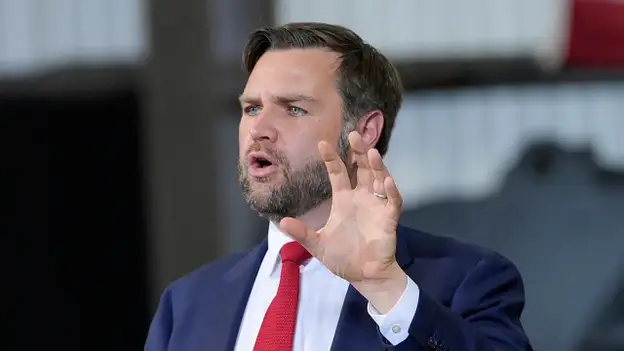
Vice President JD Vance said the full language of the memorandum of understanding between the U.S. and Iran could be released as early as today and on Friday by the latest during a Wednesday interview with CBS.
Vance told the network that the U.S. had refrained from releasing the full text after requests from its allies in Qatar and Pakistan.
"There are some frankly diplomatic protocols that I don't fully understand. The Qataris and the Pakistanis who have been helpful in mediating this agreement with the Iranians, they've asked us not to release the full text for a little while. It will come out at the latest on Friday. We're actually trying to push them to get it out today because we want to tell the American people what's in this deal," Vance said.
"It's fundamentally a good deal for the American people. But it's also very simple, and I've also seen some misrepresentations about it. So, in short, what it does is it opens the Strait of Hormuz immediately. This is why you see oil prices down in the seventies from a high in the 120s, is because you're seeing the Strait already open its traffic to the flow of oil and gas," he said.
"It also provides a framework, whereby if the Iranians give us what we need on stopping the funding of terrorism, on no longer pursuing a nuclear weapon, then they can get some benefits, be re-invited into the world economy. And when I say benefits I'm talking about sanctions relief on their economy," Vance concluded.
Trump says Strait of Hormuz will be opened 'in full' within two days
President Donald Trump said he expects the Strait of Hormuz to be opened "in full" within two days while speaking to reporters at the G7 Summit in France on Wednesday.
Referring to an agreed upon memorandum of understanding to end hostilities between the U.S. and Iran, Trump said "It's a very strong deal, nobody knows what it is, but it's very strong."
"Most people seem to be very happy. Who's really happy is the market, because the market's gone up thousands of points over the last four or five days since hearing about it and the Strait is going to be opening, it's already partially opened, it's gonna be opening up soon in full, over the next day or two," Trump said.
"And the market has gone wild and oil has come tumbling down. Oil is at $73, $74 and it's getting very close to where it was before the crisis, the difference is now we have Iran without a nuclear weapon," he said.
The average price of crude oil futures plummeted below $80 for the first time since March after the U.S. and Iran announced they had reached a memorandum of understanding on Monday.
"There's nothing so smart as the market," Trump added.
"The alternative would be a worldwide depression," he also said.
Trump refutes reports of $300B investment in Iran, sends warning to Tehran 'if they misbehave'
President Donald Trump on Wednesday called reports of a leaked memorandum of understanding between the U.S. and Iran "false" and said the U.S. would not be giving Iran any money as part of the ceasefire framework.
Asked by Fox News' Peter Doocy about reports of a $300 billion investment and reconstruction fund funded by Gulf allies, Trump responded, "It's false. False."
"You can invest if you want. I mean, what am I going to do, say nobody's ever allowed to invest? No, we're not investing. We're not putting up $0.10. And, people can decide to do that, but that's up to them. I mean, do you want me to say nobody's ever allowed to invest in in a country?" Trump said.
"We are not investing in it and we do not have a fund," Trump said.
Doocy asked Trump if he was asking Gulf countries to invest in any such fund. The president replied, "No, I'm not."
"If they do it, fine. But I would say they won't be doing it for a while until they find out the behavior. It's a behavior thing, but we are not investing. That's a false story that got picked up incorrectly," Trump said.
Trump also said that the memorandum of understanding is not final and that if Iran does not behave that the U.S. would return to bombing the country.
"No, it's not final it's a memorandum of understanding and if I don't like it, we'll go back to shooting at them, dropping bombs on their head," he said.
"If I don't like it, if they don't behave, we'll go right back to dropping bombs right smack on the middle of their head, ok? Because they've misbehaved for 47 years."
Live Coverage begins here